.png)

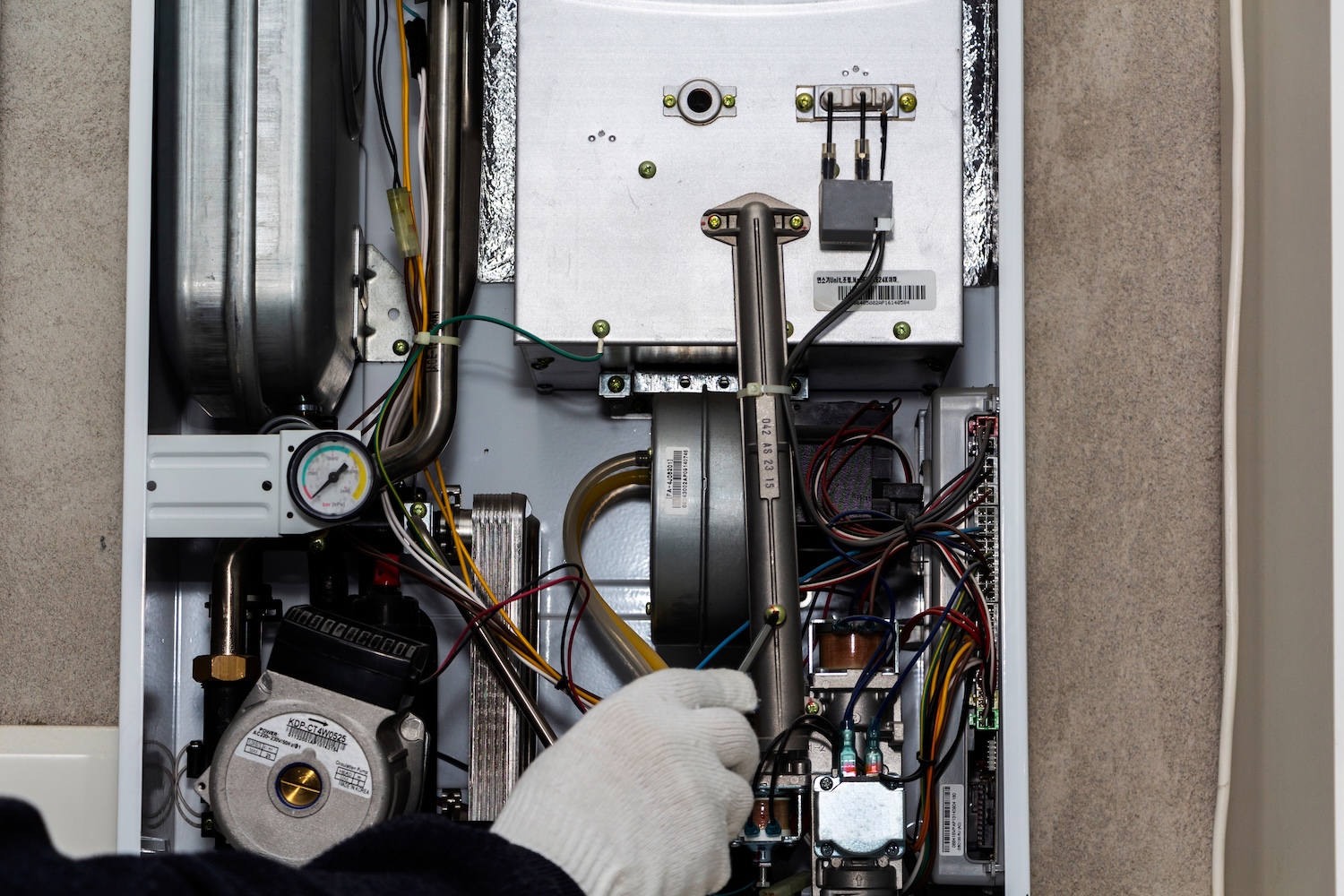
No one puts “spend money on the furnace” at the top of their wish list. But when yours stops working during a cold Utah winter, you don’t want to pay for a repair that won’t last. You also don’t want to replace the entire furnace if one repair could solve the problem.
The 50% rule promises a simple answer. If the repair costs more than half the price of a new furnace, replace it. But what happens when the diagnosis is wrong, the replacement quote is unusually high, or one affordable part could safely restore your heat?
Before you spend thousands, here's how to use the 50% rule without letting one number make the decision for you.
What Is the 50% Rule for Furnace Repair?
The math is simple. A new furnace can cost between $2,500 and $5,000, depending on the unit and installation. If your comparable replacement estimate is $4,000, a $2,000 furnace repair reaches the 50% mark. At that point, putting the $2,000 toward a new system may provide more long-term value.
Why? A new furnace may give you:
- A new manufacturer warranty
- More dependable heat
- Better energy efficiency
- Fewer near-term repair concerns
- Improved comfort and temperature control
Still, the 50% rule should guide your questions, not make the decision for you. The age and condition of the furnace matter. So do the type of repair, the accuracy of the diagnosis, and what’s included in the replacement estimate.
When the 50% Rule Can Help You Decide
The rule becomes more useful when several signs point in the same direction.
Your Furnace Is Near the End of Its Expected Life
An expensive repair may make less sense when the furnace is already well into its service life and other major parts are showing wear. ENERGY STAR recommends considering replacement when a furnace is more than 15 years old, especially when it also needs frequent repairs or heating costs are increasing.
Age alone doesn’t mean a furnace must be replaced. A well-maintained older system may still have reliable years ahead. However, age combined with a major repair and declining performance makes replacement worth a closer look.
Repairs Are Becoming a Pattern
One repair is different from several repairs in a short period. Review what you have spent over the last two or three heating seasons, not just today’s estimate.
Frequent breakdowns cost more than repair bills. They take up your time and leave you wondering whether the heat will come on when you need it. In that situation, replacement may provide greater reliability and peace of mind.
The Repair Is Major and the Rest of the System Is Declining
A major component failure on an older, inefficient furnace can change the equation. Ask the technician what failed, why it failed, and what condition the rest of the system is in.
The answer should be specific. “It's old” isn't a complete diagnosis.
When the 50% Rule Doesn't Apply
The 50% rule is only useful when the repair and replacement costs are based on an accurate diagnosis and complete information. If the problem was misdiagnosed, the replacement quote is incomplete, or safety is a concern, the percentage alone won’t give you the right answer.
The Furnace Was Misdiagnosed
An accurate diagnosis should come before any replacement estimate. Sometimes one failed part can make the entire furnace seem beyond repair.
That’s exactly what happened to K. Lund customer Melissa B. Another company told her that her furnace couldn’t be repaired and quoted $9,800 for a replacement. Instead of committing to a new furnace, Melissa asked K. Lund for a second opinion. Colton found that the actual problem was one replaceable part. He completed the furnace repair and saved her approximately $9,400.
Melissa appreciated more than the savings. “No second appointments with high pressure sales, ‘today only prices’ and fake discounts, just good quality work.”
Kyle had a similar experience with a furnace that was barely 10 years old. Another company quoted him $3,500 for a repair, but K. Lund found and fixed the actual problem for less than $100. Kyle thanked the team for its “honesty and professionalism.”
These outcomes don't mean every furnace can or should be repaired. They show why getting a second opinion before an expensive repair or replacement could save you thousands.
The Repair Is Small but the Replacement Quote Is Inflated
The 50% rule compares two numbers, so both numbers need to be trustworthy.
Ask for an itemized repair estimate and a written replacement proposal. Make sure the replacement quote identifies the furnace model, efficiency rating, warranty, labor, permits, and any necessary duct or ventilation work. When applying the 50% rule, compare the repair cost with the total installed cost of a properly sized furnace. Otherwise, you may be comparing a complete repair estimate with a replacement price that doesn’t include all the necessary work.
The Existing Furnace Is Relatively Young and Otherwise in Good Shape
A repair near the 50% line may still make sense if the furnace is younger, has been dependable, and is in good overall condition. It may also have parts or labor warranty coverage that changes your out-of-pocket cost.
Before authorizing the work, ask:
- Is the failed part covered by a warranty?
- Is this an isolated problem or a sign of broader deterioration?
- How long should the repair reasonably last?
- Are replacement parts readily available?
- What other major components show wear?
Safety Requires a Different Decision
Cost rules should never override safety. A cracked heat exchanger, combustion problem, improper venting, or carbon monoxide concern needs immediate professional attention.
Carbon monoxide and natural gas aren’t the same hazard, and their warning signs are different.
Carbon monoxide can’t be seen, smelled, or tasted. Symptoms of exposure can include headaches, dizziness, nausea, weakness, and confusion. If a carbon monoxide alarm sounds or you suspect exposure, get everyone out of the home and into fresh air, then call 911. Don’t re-enter until authorities say it’s safe.
Natural gas is treated with an odorant that often smells like rotten eggs. If you notice that odor, leave immediately. Once you’re in a safe location, call 911 and your gas utility.
Once emergency responders or the gas utility have addressed the immediate danger and confirmed that it’s safe to return, a qualified HVAC technician can determine whether the furnace can be safely repaired or needs to be replaced.
6 Questions to Ask Before Choosing Furnace Repair or Replacement
For a clearer answer, compare these factors:
- Safety: Is there a confirmed hazard or damage that prevents safe operation?
- Diagnosis: Has the exact failure been identified and explained?
- Age: Is the furnace relatively young, midlife, or nearing the end of its expected service life?
- Repair history: Is this the first issue or one of several recent breakdowns?
- Overall condition: Are other expensive components likely to fail soon?
- True costs: Are you comparing the complete repair price with a written, apples-to-apples replacement quote?
A trustworthy HVAC technician should help you understand these factors without turning the visit into a high-pressure sales appointment.
Get Started with K Lund
Contact us today for expert HVAC services or explore our range of solutions tailored for you.
FAQs
Frequently Asked Questions About Furnace Repair and Replacement
It can be. Consider age with the repair cost, condition, efficiency, and repair history. A modest repair may add useful life to a reliable older furnace. A major repair may offer less value if other components are deteriorating.
Affordable repairs to an otherwise safe, reliable furnace are often worthwhile. The decision depends on the failed component, age, warranty coverage, and complete system condition. Start with a professional diagnosis.
Yes, especially if the inspection was brief, the explanation is unclear, or the offer relies on a “today only” price. Ask the second company to perform its own diagnosis.
It may, especially if you’re replacing an older, less efficient furnace. A furnace’s AFUE rating shows how efficiently it turns fuel into heat. However, your actual savings will also depend on Utah weather, fuel prices, thermostat settings, insulation, duct condition, and the quality of the installation.
Call when the furnace won’t start, repeatedly cycles on and off, makes unusual noises, produces persistent burning odors, shows visible smoke or soot, or can’t maintain the set temperature. Stop using the furnace and call an HVAC professional if you notice smoke, soot, or a persistent burning smell. If you smell natural gas or suspect carbon monoxide exposure, leave the home immediately and call 911 from a safe location.
Yes. If replacement is the safe, sensible option but the timing is difficult, explore K. Lund Mechanical's HVAC financing options. Review the terms, total cost, and payment schedule before choosing a plan.
Make the Furnace Decision That Protects Your Comfort and Budget
Furnace expenses are frustrating because they’re usually unexpected. But your furnace brings comfort to the everyday moments that matter. It helps you wake up to a warm bedroom, relax together in a comfortable living room at night, and know your family will stay warm and safe when temperatures drop.
The best financial choice isn't automatically the lowest price today. It's the option that delivers dependable comfort without unnecessary expense.
Sometimes that's a new, more efficient furnace. Sometimes it's one honest repair.
K. Lund Mechanical provides furnace repair, maintenance, and replacement throughout Salt Lake, Summit, and Utah counties. With more than 30 years of combined experience and over 260 five-star Google reviews, the team has earned homeowners’ trust by diagnosing problems carefully and explaining the options.
If your furnace isn't working or a replacement quote doesn't feel right, schedule your free consultation or call (801) 244-3133. A clear second opinion could help you make a safer, more confident decision.
Explore Our Latest Insights
Stay informed with our expert HVAC advice and tips.